Sinner's for Laundry 2. Chemical Action

2. Chemical Action: Detergents, Softeners, and Scents

Cleaning-product chemists often refer to Sinner’s circle, a framework that explains cleaning effectiveness through four key factors: temperature, chemical action, mechanical force, and time. Despite the name, it has nothing to do with morality or purity; it is named after Herbert Sinner, a chemical engineer at Henkel who introduced the concept in 1959.
Chemical action is the part of Sinner’s Circle that most people think of first: the products added to the wash. Detergent, stain removers, bleach alternatives, fabric softeners, and fragrance boosters all affect how laundry looks, feels, and smells.
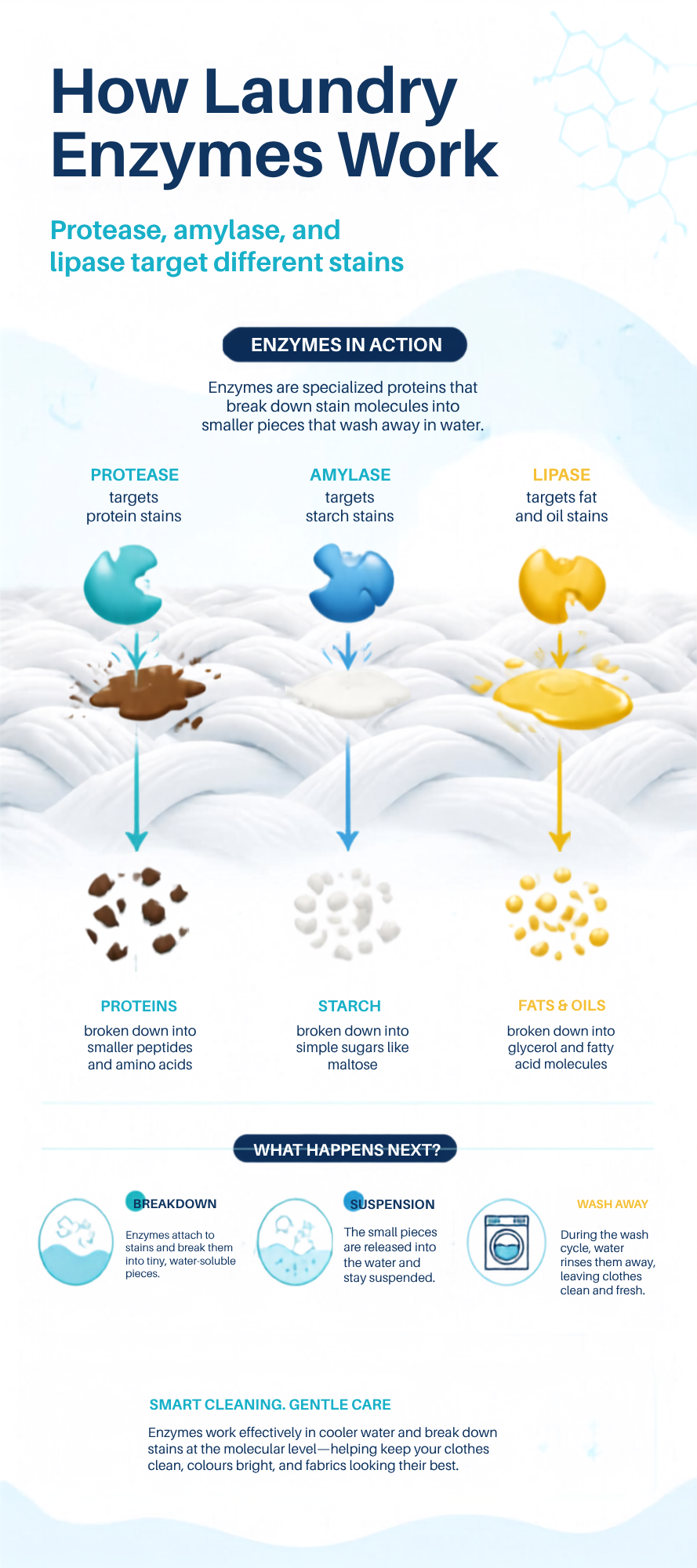
Detergent is the main cleaning chemical. It contains ingredients called surfactants that surround oils and dirt so they can be lifted from fabric and rinsed away. Many detergents also contain enzymes, which target specific stains such as protein-based food, grass, sweat, and body oils. Choosing the right detergent matters. High-efficiency, or HE, machines require low-sudsing HE detergent, while cold-water washing works best with detergent designed to dissolve in cooler temperatures.
More detergent is not always better. Too much can leave residue on clothes, trap odors, make towels less absorbent, and create excess suds that interfere with rinsing. Following the product dosage guidance—and reducing it for small or lightly soiled loads—usually produces cleaner results.
Fabric softeners work differently from detergent. They coat fibers to reduce static and create a smoother feel. They can be helpful for some items, but they are not ideal for everything. Towels, athleticwear, flame-resistant clothing, and moisture-wicking fabrics may lose performance when coated with softener. Dryer balls are often a useful alternative for reducing static without adding a fabric coating.
Scented products add fragrance, not cleanliness. A fresh scent can be enjoyable, but it should not substitute for proper washing, drying, and machine maintenance. Persistent odors often signal detergent buildup, mildew, poor drying, or overloaded loads.
Chemical action works best when it matches the load. Use detergent to clean, targeted stain treatment for difficult spots, and scent or softening products only when they suit the fabric and household preferences.